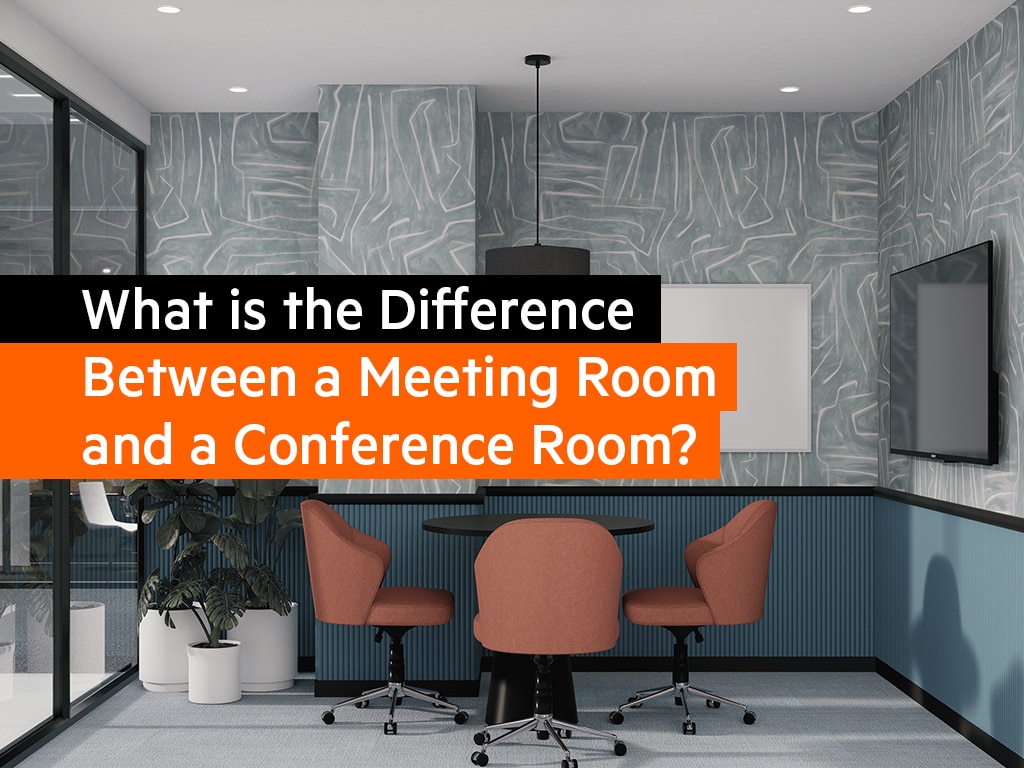
Walk into any modern office and you will likely find multiple types of dedicated workspaces — some small and informal, others large and professionally equipped. Two of the most commonly confused spaces are the meeting room and the conference room. The terms get used interchangeably so often that many professionals genuinely do not know whether there is a real difference — or if it even matters which one they book.
It does matter. The space you choose for a gathering sets the tone before anyone says a single word. It shapes how participants feel, how formal or relaxed the conversation flows, and how well the room’s technology supports what you need to accomplish. Whether you manage an office meeting room booking system, run a growing startup, or work from a coworking space with multiple room types available, understanding the difference between meeting and conference spaces will help you make smarter decisions every time.
This guide breaks it all down — purpose, size, atmosphere, equipment, naming conventions, and signage — so you never book the wrong room again.
What Purposes Do Meeting Rooms Serve?
A meeting room is a compact, flexible workspace designed for smaller groups to gather, collaborate, and communicate without the noise and distraction of an open-plan office. The meeting room meaning centres on accessibility and agility — these are spaces you can book quickly, use informally, and adapt to a wide range of purposes without needing advanced planning.
A meeting room is a small to medium-sized space designed for discussions, brainstorming sessions, and quick team huddles. It usually accommodates 4 to 12 people and is ideal for internal meetings, one-on-one sessions, or small project updates.
Here is what office meeting rooms are typically used for:
Internal Team Catch-ups
Daily standups, weekly check-ins, project status updates — these are the bread and butter of the meeting area. The informal setting encourages honest, open dialogue without the weight of a formal environment.
One-on-one sessions
Performance reviews, mentoring conversations, feedback discussions, and HR interviews all benefit from the privacy and intimacy of a smaller room that does not feel intimidating.
Brainstorming and Ideation
Meeting rooms are great places for brainstorming, planning, or team-building, as well as sharing information such as providing updates or offering feedback on projects.
Client calls and Small Presentations
A well-equipped office meeting room with a screen, reliable WiFi, and a whiteboard is entirely sufficient for a video call with a client or a quick product walkthrough for two or three people.
Impromptu Discussions
Unlike a company conference room, a meeting room can often be booked on very short notice — sometimes with just a few minutes’ lead time through a digital booking system.
The defining characteristic of a meeting room is its flexibility. It is the everyday workhorse of any office — used constantly, by almost everyone, for almost everything.
What Purposes Do Conference Rooms Serve?
A conference room operates at a different level of formality, scale, and strategic importance. Understanding the conference room meaning requires thinking beyond the day-to-day rhythm of internal communication and into the high-stakes moments that define how a business presents itself.
A conference room is your go-to space for the big moments — larger, more formal meeting environments purpose-built for significant gatherings and high-stakes business activities.
The most common uses of a company conference room include:
Executive and Board-level Meetings
When senior leadership, board members, or investors gather to make important decisions, the environment needs to match the gravity of the conversation. A conference meeting room delivers professional gravity.
Client Presentations and Pitches
First impressions in business are often made in the office conference room. Conference rooms usually have a professional atmosphere, which is useful when you want to impress a new client or wow an investor, allowing for in-depth discussions with minimal noise levels and outside distractions.
Training Sessions and Workshops
When larger groups need structured learning, a conference room provides the space, seating, and technology to deliver effective training at scale.
Strategic Planning Sessions
Quarterly business reviews, annual planning retreats, and cross-departmental strategy discussions require the sustained focus and professional infrastructure that a proper conference room provides.
Hybrid and Remote Meetings
Most conference rooms have multimedia equipment and conferencing software, making it easy to connect with remote employees or clients who cannot meet in person.
The conference meeting environment is intentionally formal because formality signals importance — to both the people in the room and those watching from outside.
Also Read:- Top Benefits of Flexipass for Workspace Flexibility
The Difference Between a Meeting Room and a Conference Room
Now that we understand what each space is designed for, here is a clear breakdown of the core differences between meeting and conference rooms across the most important dimensions:
Size and Capacity Conference rooms typically accommodate 10 to 50 or more participants, with spacious layouts that prevent the cramped feeling that stifles engagement during extended sessions. Meeting rooms generally serve 2 to 10 people, with compact dimensions that foster intimacy and direct communication.
Formality and Atmosphere Meeting rooms often have a casual, collaborative vibe that encourages open discussion, and may feature flexible furniture, colourful walls, and natural lighting. Conference rooms are designed for formality, often with neutral tones, long tables, and a professional setting that reflects the type of discussions typically held there.
Technology and Equipment Conference rooms usually have more advanced technology, including audio equipment, phone conferencing systems, laptops or computers, and smart boards. Meeting rooms may also have display screens and projectors, but these tools are suited to smaller groups rather than large-scale presentations.
Booking and Accessibility Meeting rooms are generally easier to book and may be available on short notice, often located throughout an office to encourage spontaneous discussions. Conference rooms, because of their size and demand, usually require advance booking.
Cost Meeting rooms are generally more budget-friendly due to their smaller size and simpler equipment. Conference rooms are more expensive and can carry additional fees such as costs for catering.
Purpose The meeting room meaning centres on collaboration, communication, and internal daily work. The conference room meaning centres on formality, presentation, and high-stakes business engagement.
Also Read:- How to Become a Freelancer — A Complete Guide
Boardroom vs Conference Room vs Meeting Room
Many professionals also encounter the term “boardroom” and wonder how it fits into this picture. Here is a clear comparison across all three:
| Feature | Meeting Room | Conference Room | Boardroom |
|---|---|---|---|
| Size | Small — 2 to 10 people | Medium to large — 10 to 50+ people | Large — typically 10 to 30 senior leaders |
| Formality | Informal to semi-formal | Formal | Highly formal |
| Primary Use | Team huddles, brainstorming, 1:1s | Presentations, training, client meetings | Executive decisions, board-level strategy |
| Technology | Basic — screen, whiteboard, WiFi | Advanced — AV, video conferencing, smart boards | Premium — full AV, secure communications |
| Booking | Easy, often short notice | Advance booking required | Reserved for senior leadership |
| Furniture | Practical, flexible | Professional, often fixed long table | Executive, high-quality materials |
| Atmosphere | Relaxed, collaborative | Professional, structured | Authoritative, formal |
| Who Uses It | All staff | Managers, teams, clients | Board, C-suite, senior executives |
| Naming Examples | Spark Room, Brainstorm Bay | Innovation Suite, Strategy Room | The Boardroom, Executive Suite |
The boardroom is essentially a subset of the conference room category — but reserved specifically for governance, board meetings, and the most senior leadership discussions. Not every company has a dedicated boardroom, but most medium-to-large organisations will have at least one.
Also Read:- What Is Shared Office Space?
Conference Room Signs
Effective conference room signage is more than a navigational nicety — it is a professional necessity. In any office with multiple rooms, clear and consistent signage prevents confusion, reduces booking conflicts, and reinforces the culture and identity of the workspace.
Good conference room signage typically includes the room name and its capacity, real-time availability status (occupied or available), booking information or a QR code to reserve the space, and wayfinding indicators to help visitors locate the room easily.
Digital room signs — small screens mounted outside the room displaying live calendar availability — have become the standard in modern offices and coworking spaces. They integrate directly with booking platforms like Google Calendar, Microsoft Outlook, or dedicated room management systems, giving anyone in the office instant visibility into whether a room is free.
The room name on the sign matters too. Many organisations use themed conference room names to build culture and make rooms memorable. Themes include cities, planets, historical figures, mountains, or values-based words. You must have effective conference room signs if you want to capitalise on the business potential of your organisation. People are guided and pointed in the right direction by signage, and the right sign establishes the types of spaces available and the direction to reach them.
Well-chosen conference room names make scheduling conversations easier (“Let’s meet in Everest at 3pm”), reinforce company culture, and give your workspace a personality that generic numbering systems simply cannot match.
Frequently Asked Questions
1. What is the difference between a meeting room and a conference room?
A meeting room is generally designed for small team discussions, while a conference room is typically larger and suitable for presentations, client meetings, and larger groups.
2. How much does it cost to book a meeting room?
Meeting room prices vary based on location, room size, facilities, and booking duration. Many providers offer flexible hourly and daily plans.
3. How many people can a meeting room accommodate?
Meeting rooms can typically accommodate small groups of 2–10 people, while larger conference rooms can accommodate bigger teams.
4. What facilities are available in meeting rooms?
Common facilities include Wi-Fi, comfortable seating, display screens, whiteboards, air conditioning, power outlets, and video conferencing equipment.
5. Can I book a meeting room by the hour?
Yes, many meeting rooms and conference rooms are available for flexible hourly bookings, making them suitable for short meetings and discussions.
6. Can I book a conference room for a client meeting?
Yes, conference rooms are ideal for client meetings, presentations, interviews, workshops, and team discussions, with a professional environment and necessary facilities.