The modern workplace has undergone a dramatic transformation over the past few years. Businesses are no longer tied to long-term office leases or expensive traditional office setups. Instead, organizations are embracing flexible office spaces that provide agility, cost efficiency, and the freedom to scale as business needs evolve. In 2026, flexible workspaces have become the preferred choice for startups, freelancers, small and medium-sized enterprises (SMEs), and even large corporations looking to optimize costs while supporting hybrid work models.
Flexible office space is more than just a trend—it represents a new way of working. These workspaces are designed to adapt to changing business requirements, allowing companies to rent office space for a few days, months, or years without the financial burden of long-term commercial leases. Businesses can choose from private offices, coworking spaces, managed offices, dedicated desks, virtual offices, and enterprise suites, depending on their operational needs.
The increasing demand for flexibility is driven by several factors, including rising commercial real estate costs, changing employee expectations, remote work adoption, and rapid business expansion. Instead of investing heavily in office infrastructure, furniture, utilities, maintenance, and administrative staff, companies can move into a fully equipped workspace and begin operations immediately.
In this comprehensive guide, you’ll learn everything you need to know about flexible office spaces in 2026, including their different types, major benefits, pricing, and how they compare to traditional offices. We’ll also explain how to choose the right flexible workspace for your business and why Innov8 is one of India’s leading providers of premium flexible office solutions.
What Is Flexible Office Space?
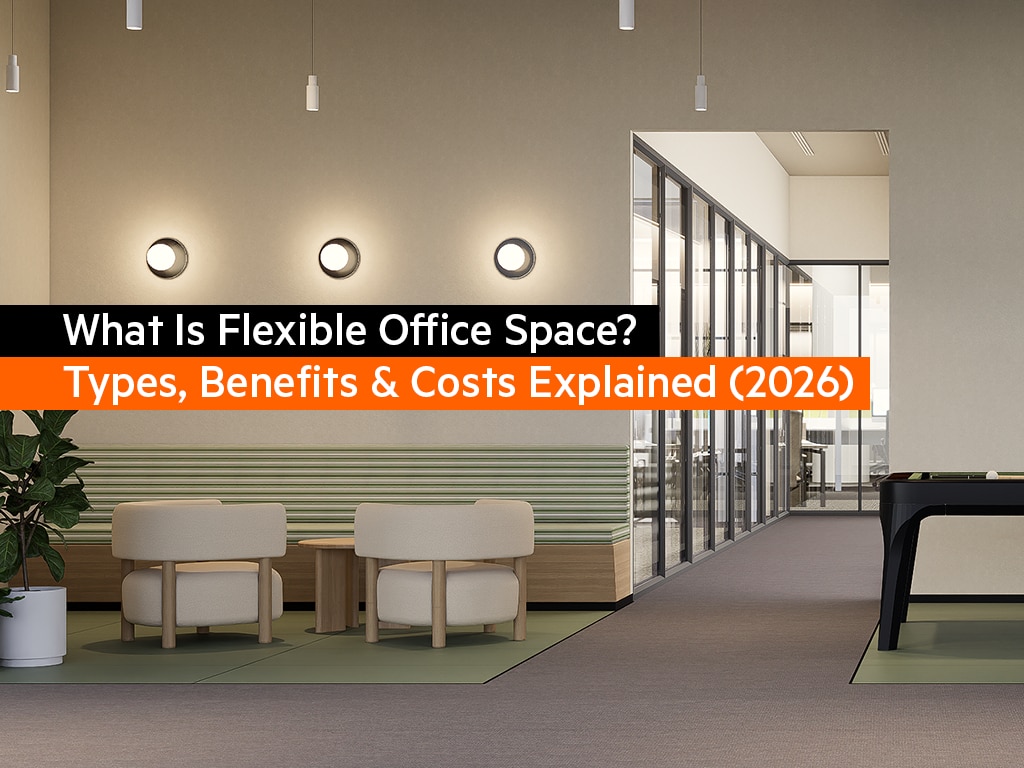
A flexible office space is a fully equipped workplace that businesses can rent on flexible terms instead of signing lengthy commercial leases. Unlike traditional office spaces that require companies to commit to multi-year agreements and invest in office infrastructure, flexible office spaces provide ready-to-use work environments that can be scaled up or down based on business requirements.
The defining feature of flexible office space is adaptability. Companies can rent a single desk, a private cabin, a managed office, or an entire office floor depending on their workforce size. As businesses grow or restructure, they can easily increase or reduce their office space without relocating or renegotiating complex lease agreements.
Flexible office providers typically include a wide range of amenities and services within a single monthly fee. These often include:
- Fully furnished workstations
- High-speed internet
- Meeting and conference rooms
- Reception services
- Housekeeping and maintenance
- Printing and scanning facilities
- Pantry and café access
- 24/7 security
- Utilities and electricity
- Business lounges
- Mail handling
This all-inclusive model allows businesses to focus on growth rather than office management.
Flexible office spaces also support various work styles. Employees can work from private offices for confidential tasks, use collaborative areas for brainstorming sessions, or reserve meeting rooms for client presentations. Many providers also offer mobile apps that enable businesses to book meeting rooms, access facilities, and manage office services digitally.
Today, flexible office spaces are used by startups, multinational corporations, consultants, freelancers, remote teams, and project-based organizations that require professional workspaces without long-term financial commitments.
Why Flexible Office Spaces Are Growing in 2026
The demand for flexible office spaces has accelerated rapidly in recent years, and in 2026, they have become an essential part of the commercial real estate landscape. Businesses are prioritizing flexibility, employee experience, and operational efficiency, making traditional office models less attractive for many organizations.
One of the biggest reasons behind this growth is the widespread adoption of hybrid work. Many companies now allow employees to split their time between home and the office. As a result, organizations no longer require large permanent office spaces. Flexible offices allow businesses to rent only the space they need while accommodating employees who come into the office on selected days.
Cost optimization is another major factor. Traditional office leasing involves significant upfront investments in security deposits, office interiors, furniture, IT infrastructure, maintenance, and utilities. Flexible office spaces eliminate these expenses by providing fully managed workplaces under predictable monthly pricing.
Business expansion has also become faster and more dynamic. Companies entering new cities or launching regional offices prefer flexible workspaces because they can establish operations within days instead of spending months setting up traditional offices.
Employee expectations have changed as well. Modern professionals value workplaces that offer premium amenities, wellness-focused environments, collaborative spaces, cafés, breakout zones, and excellent connectivity. Flexible office providers invest heavily in creating productive and engaging work environments that attract and retain talent.
Additional factors driving growth include:
- Increased startup ecosystem in India
- Rise of remote-first companies
- Demand for shorter lease commitments
- Better technology-enabled workspaces
- Access to premium business addresses
- Faster office setup
- Improved work-life balance
- Sustainable office management
As businesses continue to prioritize agility and efficiency, flexible office spaces are expected to remain one of the fastest-growing segments of the commercial real estate market in 2026 and beyond.
Types of Flexible Office Spaces
One of the biggest advantages of flexible office spaces is the wide variety of workspace options available. Different businesses have different operational requirements, team sizes, budgets, and work styles. Flexible workspace providers address these diverse needs by offering multiple office formats that can be customized as businesses grow.
1. Coworking Spaces
Coworking spaces are shared work environments where freelancers, entrepreneurs, startups, and small businesses work alongside professionals from different industries. These spaces encourage collaboration, networking, and innovation while providing access to shared amenities such as meeting rooms, internet, cafés, and community events.
Coworking spaces are ideal for:
- Freelancers
- Solopreneurs
- Remote workers
- Early-stage startups
- Digital creators
2. Private Offices
Private offices offer enclosed workspaces exclusively for one company. They provide greater privacy, confidentiality, and branding opportunities while still including all the benefits of a managed workspace.
Private offices are suitable for:
- SMEs
- Consulting firms
- Legal companies
- HR agencies
- Growing startups
3. Managed Offices
Managed offices are customized office spaces designed specifically for medium and large businesses. Providers handle office design, furniture, maintenance, IT infrastructure, and facility management while allowing businesses to customize layouts according to their operational needs.
Best suited for:
- Enterprises
- Large teams
- Regional headquarters
- Corporate offices
4. Dedicated Desks
Dedicated desks provide individuals with a reserved workstation inside a coworking environment. Unlike hot desks, the same desk remains assigned to one user, offering consistency while maintaining access to shared facilities.
Ideal for:
- Consultants
- Designers
- Sales professionals
- Hybrid employees
5. Hot Desks
Hot desks allow members to use any available workstation within the coworking area. This is one of the most affordable flexible workspace options and works well for professionals who only require occasional office access.
6. Virtual Offices
Virtual offices provide businesses with a prestigious commercial address without requiring physical office occupancy. Services often include mail handling, GST registration support, business correspondence, and call answering services.
Ideal for:
- Remote businesses
- International companies
- Startups
- Home-based businesses
Each workspace type serves a different purpose, allowing businesses to select a solution that aligns with their operational goals, team size, and budget.
Key Benefits of Flexible Office Space
Flexible office spaces offer far more than convenience—they provide strategic advantages that help businesses improve productivity, reduce operational costs, and adapt to changing market conditions.
One of the most significant benefits is cost savings. Businesses avoid large upfront investments in office interiors, furniture, internet installation, utilities, and maintenance. Instead, they pay a predictable monthly fee that covers most essential services.
Another major advantage is flexibility. Companies can easily expand their office space as they hire more employees or reduce it during slower periods. This scalability is particularly valuable for startups and fast-growing businesses.
Flexible workspaces also improve employee experience by offering modern office designs, collaborative areas, cafés, wellness zones, and premium meeting rooms. Employees benefit from professional work environments without the distractions often associated with working from home.
Other major benefits include:
- Faster office setup
- Premium business addresses
- Enterprise-grade internet
- Meeting room access
- Administrative support
- Housekeeping and maintenance
- Networking opportunities
- Better work-life balance
- Enhanced brand image
- Flexible lease terms
Businesses also gain access to professional reception services, visitor management, secure IT infrastructure, and technology-enabled meeting spaces without hiring dedicated administrative teams.
As organizations continue to embrace hybrid work and rapid expansion strategies, flexible office spaces provide the agility needed to stay competitive in today’s fast-changing business environment.
Who Should Choose Flexible Office Space?
Flexible office spaces are designed to meet the needs of a wide range of professionals and businesses. From solo entrepreneurs to multinational corporations, these workspaces offer the flexibility, convenience, and scalability required in today’s fast-changing business environment. Whether you’re launching a new venture or expanding an established business, flexible office solutions can help reduce costs while providing a professional workspace.
Startups and Entrepreneurs
Startups often operate with limited budgets and rapidly changing team sizes. Flexible office spaces allow entrepreneurs to establish a professional office without investing in expensive infrastructure or committing to long-term leases. As the business grows, startups can easily upgrade to larger office spaces without relocating.
Small and Medium-Sized Enterprises (SMEs)
SMEs benefit from predictable monthly costs and access to premium office facilities. Instead of managing utilities, internet providers, housekeeping, and maintenance separately, businesses receive an all-inclusive office solution that simplifies operations and improves productivity.
Large Enterprises
Many enterprises use flexible office spaces for regional headquarters, satellite offices, project teams, or temporary expansion. Managed office solutions provide enterprise-grade infrastructure while allowing businesses to scale according to changing workforce requirements.
Remote and Hybrid Teams
As hybrid work continues to grow in 2026, many companies no longer require large permanent offices. Flexible office spaces provide employees with access to professional work environments whenever collaboration, client meetings, or team discussions are required.
Freelancers and Consultants
Independent professionals often need a professional setting for client meetings and focused work. Flexible workspaces provide access to meeting rooms, high-speed internet, reception services, and business lounges without the overhead of maintaining a private office.
Businesses Expanding to New Cities
Companies entering new markets can establish operations quickly through flexible office providers. Instead of spending months setting up infrastructure, businesses can begin operations almost immediately while evaluating long-term office requirements.
Industries that commonly use flexible office spaces include:
- Technology and IT
- Digital marketing agencies
- Legal firms
- Financial services
- Healthcare consulting
- Recruitment agencies
- Real estate companies
- E-commerce businesses
- Educational institutions
- Creative and design studios
Regardless of industry or company size, flexible office spaces provide businesses with the agility needed to adapt to changing market conditions while maintaining a professional corporate presence.
How Much Does Flexible Office Space Cost in 2026?
The answer depends on several factors, including the city, location, office type, amenities, lease duration, and workspace provider.
Unlike traditional office leasing, where businesses must pay security deposits, invest in office interiors, purchase furniture, and manage utilities separately, flexible office spaces combine these expenses into one predictable monthly payment. This makes budgeting easier and significantly reduces upfront costs.
Factors That Affect Pricing
Several elements influence the cost of flexible office space:
- City and business district
- Office type (coworking, private office, managed office)
- Number of workstations
- Lease duration
- Included services and amenities
- Building grade and location
- Meeting room usage
- Parking availability
Typical Pricing in India (2026)
While costs vary across cities, businesses can expect the following approximate monthly pricing:
| Workspace Type | Approximate Monthly Cost |
| Hot Desk | ₹5,000 – ₹12,000 per person |
| Dedicated Desk | ₹8,000 – ₹18,000 per person |
| Private Office | ₹12,000 – ₹30,000+ per seat |
| Managed Office | Custom pricing based on team size |
| Virtual Office | ₹1,000 – ₹5,000 per month |
Premium business districts such as Connaught Place, Cyber City Gurgaon, Aerocity, Bandra Kurla Complex (Mumbai), and Bengaluru’s CBD generally command higher prices due to superior connectivity and infrastructure.
Although monthly rates may appear higher than leasing an empty office, businesses save considerably on:
- Office interiors
- Furniture
- Internet installation
- Electricity
- Housekeeping
- Maintenance
- Security
- Reception staff
- Office equipment
When these operational costs are considered, flexible office spaces often deliver better value while reducing financial risk and administrative complexity.
Flexible Office Space vs Traditional Office
Choosing between a flexible office and a traditional office depends on your company’s size, growth plans, budget, and operational requirements. While both options offer professional work environments, they differ significantly in terms of cost, flexibility, setup time, and management responsibilities.
A traditional office typically requires businesses to lease an unfurnished commercial space. Companies must invest in furniture, internet infrastructure, utilities, office design, security systems, housekeeping, and facility management. Lease agreements often range from three to nine years, making them less suitable for businesses with evolving space requirements.
A flexible office, by contrast, offers a fully managed workspace where businesses can begin operations immediately. Providers handle maintenance, utilities, internet, security, reception services, and office management, allowing organizations to focus on business growth rather than operational tasks.
Comparison Table
| Feature | Flexible Office Space | Traditional Office |
| Setup Time | Immediate | Several weeks or months |
| Lease Flexibility | High | Low |
| Upfront Investment | Low | High |
| Office Furniture | Included | Purchased separately |
| Internet & Utilities | Included | Self-managed |
| Reception Services | Included | Additional cost |
| Maintenance | Included | Self-managed |
| Scalability | Easy | Limited |
| Administrative Support | Available | Self-managed |
| Best For | Startups, SMEs, Hybrid Teams, Enterprises | Large businesses with stable long-term requirements |
Flexible office spaces are especially beneficial for businesses that value agility, scalability, and predictable operational costs. Traditional offices remain suitable for organizations requiring complete control over office design and planning to occupy the same premises for many years.
How to Choose the Right Flexible Office Space
Selecting the right flexible office space requires more than simply comparing prices. The workspace you choose should support your company’s growth, enhance employee productivity, and provide a professional environment for clients and partners.
The first consideration is location. Choose an office situated in a well-connected business district with easy access to public transportation, metro stations, airports, restaurants, and essential services. A premium business address can also strengthen your company’s brand image.
Next, evaluate the quality of the workspace itself. Look for ergonomic furniture, reliable high-speed internet, comfortable meeting rooms, breakout areas, and sufficient natural lighting. A thoughtfully designed office contributes significantly to employee satisfaction and productivity.
Scalability is another important factor. Businesses often grow, restructure, or adopt hybrid work models. Ensure the provider allows you to easily increase or reduce office space without major disruptions or penalties.
Technology infrastructure should also be assessed carefully. Modern businesses require enterprise-grade internet, video conferencing facilities, access control systems, and uninterrupted power supply to support day-to-day operations.
Before signing a contract, review the services included in the monthly fee. Ideally, your package should cover:
- Reception services
- Housekeeping
- Utilities
- Internet connectivity
- Security
- Meeting room access
- Maintenance
- Pantry facilities
It’s equally important to review customer feedback, occupancy rates, and the provider’s track record. A reputable workspace operator with multiple locations and strong customer support is more likely to deliver a consistent experience.
Finally, compare contract terms, notice periods, hidden charges, and customization options to ensure the office aligns with your long-term business goals.
Why Choose Innov8 Flexible Office Spaces?
Innov8 has become one of India’s most trusted providers of premium flexible office spaces by combining world-class infrastructure, thoughtful design, and flexible workspace solutions. Whether you’re an entrepreneur, a growing startup, or a large enterprise, Innov8 offers office environments designed to support productivity, collaboration, and business growth.
One of Innov8’s biggest strengths is its plug-and-play workspace model. Businesses can move into fully furnished offices equipped with ergonomic workstations, enterprise-grade internet, meeting rooms, reception services, housekeeping, and advanced security—without worrying about office setup or maintenance.
Innov8 also offers a wide range of workspace solutions, including:
- Coworking spaces
- Private offices
- Managed office spaces
- Dedicated desks
- Meeting rooms
- Event spaces
- Enterprise office solutions
As your business grows, Innov8 makes it easy to expand your workspace without relocating. Flexible lease terms and scalable office configurations ensure that companies only pay for the space they actually need.
Another key advantage is Innov8’s presence in premium commercial locations across major Indian cities. These strategically located centres offer excellent connectivity, prestigious business addresses, and access to vibrant business communities.
Businesses choosing Innov8 also benefit from:
- Modern office interiors
- High-speed internet
- Smart meeting rooms
- Professional reception services
- Community networking events
- Wellness-focused work environments
- 24/7 security
- Café and pantry facilities
- Sustainable workspace design
By combining flexibility, technology, hospitality, and design, Innov8 creates workspaces that help businesses thrive in today’s dynamic business landscape.
Final Thoughts
Flexible office spaces have fundamentally changed the way businesses operate. In 2026, organizations are increasingly prioritizing agility, collaboration, and operational efficiency over long-term office ownership and rigid lease agreements. As hybrid work becomes the norm and businesses seek faster expansion, flexible workspaces provide an ideal solution that balances professionalism with adaptability.
Unlike traditional offices, flexible office spaces eliminate the complexities of office management while offering fully equipped work environments that can be scaled according to changing business needs. From startups and freelancers to multinational corporations, organizations of every size can benefit from predictable costs, premium infrastructure, and access to collaborative communities.
When choosing a flexible office space, businesses should evaluate factors such as location, infrastructure, amenities, lease flexibility, technology, and customer support. The right workspace can improve employee productivity, strengthen brand image, and support long-term business growth.
Innov8 continues to lead the flexible workspace industry by offering thoughtfully designed offices, premium amenities, flexible leasing options, and strategically located centres across India’s major business hubs. Whether you need a single desk, a private office, or a customized enterprise solution, Innov8 provides the flexibility and support required to succeed in today’s competitive business environment.
If you’re planning to establish a new office or transition to a smarter workspace model in 2026, flexible office spaces offer the convenience, scalability, and cost efficiency modern businesses need to stay ahead.
Frequently Asked Questions (FAQs)
1. What is a flexible office space?
A flexible office space is a fully furnished workspace that businesses can rent on flexible terms. It includes amenities such as internet, meeting rooms, reception services, and maintenance, allowing companies to move in and start working immediately.
2. Who should use flexible office spaces?
Flexible office spaces are ideal for startups, freelancers, SMEs, remote teams, consultants, project-based teams, and large enterprises looking for scalable office solutions.
3. Are flexible office spaces cheaper than traditional offices?
While monthly rental costs may seem higher, flexible office spaces often reduce overall expenses by including furniture, utilities, maintenance, internet, and office management in one package.
4. Can I rent a flexible office for a short period?
Yes. Most providers offer flexible lease terms ranging from daily passes and monthly memberships to annual agreements.
5. What’s the difference between a coworking space and a flexible office?
A coworking space is one type of flexible office where individuals share common work areas. Flexible office spaces also include private offices, managed offices, dedicated desks, and virtual offices.
6. Do flexible office spaces include meeting rooms?
Yes. Most providers offer fully equipped meeting rooms that can be booked as needed for presentations, interviews, client meetings, and team discussions.
7. What amenities are included in flexible office spaces?
Common amenities include high-speed internet, reception services, housekeeping, utilities, meeting rooms, security, printing facilities, pantry access, and business lounges.
8. Can businesses scale their office space easily?
Yes. One of the biggest advantages of flexible office spaces is the ability to expand or reduce office size as business requirements change.
9. Are flexible office spaces suitable for large enterprises?
Absolutely. Many providers offer managed office solutions and customized enterprise workspaces for large organizations.
10. Why should I choose Innov8 for flexible office space?
Innov8 offers premium workspaces, flexible leasing, enterprise-grade infrastructure, modern amenities, and strategically located centres, making it an excellent choice for businesses seeking professional and scalable office solutions in 2026.